The Cover StorySep 2026

Feature · Exclusive
The Fed Chairman Just Told Markets to Stop Watching Him
Kevin Warsh used his first Jackson Hole keynote to dismantle a communication practice the Federal Reserve has relied on since 2008. Markets read the speech as hawkish and moved accordingly. The more durable change is that the central bank has decided, deliberately, to tell you less about what it intends to do next.
Business News.
Read all →
Business News
Credit Is Loose Right Now, But Not Loose for You
The Federal Reserve chairman told Jackson Hole he would be hard pressed to call financial conditions restrictive, citing tight credit spreads, strong issuance and easier lending standards. In the same remarks he noted that housing and agriculture are showing strain. Both statements are true, and the gap between them is where most small businesses live.

Three Fed Officials Wanted a Hike. The Statement Got Shorter.
The Federal Open Market Committee held rates on 29 July by a nine to three vote, with all three dissenters pushing for an increase rather than a cut. The more consequential change was the statement itself, which is getting shorter on purpose, and what that means for anyone whose planning depended on reading the Fed's intentions in advance.

Record Borrowing, Record Failures: Small Business Runs Out of Defences
The 67 Percent Bankruptcy Spike Has an Eighteen-Month Fuse. Why Small Business Bankruptcies Are Rising Five Times Faster Than Everyone Else's

Volkswagen's Real Problem Is Eight Thousand Kilometres From Wolfsburg
Wolfsburg Math: Why 100,000 Job Cuts Do Not Close Volkswagen's Gap Volkswagen Is Cutting the Cost Base. The Revenue That Made It Affordable Is What Changed.
Powered Magazine · The voice of modern leadership
Leadership.
Read all →
Three Successions in Six Days, and the Question None of Them Answered
The Fourteen-Month Handoff: What Boards Get Wrong About Naming a Successor? Long Runway, Interim CFO, or Internal Promotion: Choosing Your Succession Posture

The No. 2 Exit: Why Boards Underestimate Deputy Departures
Fidji Simo's exit from OpenAI and Sumit Rana's from Epic Systems both happened the same week, for unrelated reasons. Here's why the deputy seat deserves the same succession scrutiny boards reserve for the CEO chair.

LVMH Just Picked Bvlgari's Next CEO. The Decision Is About Watches, Not Jewelry.
LVMH appointed Laura Burdese as Bvlgari's next CEO effective July 1, succeeding Jean-Christophe Babin after his transformational tenure. The succession is well-managed and overdue, but the more interesting question is what kind of strategic positioning the marketing-led appointment signals — and what it tells you about where LVMH thinks Bvlgari's growth has to come from next.
Interviews.
Read all →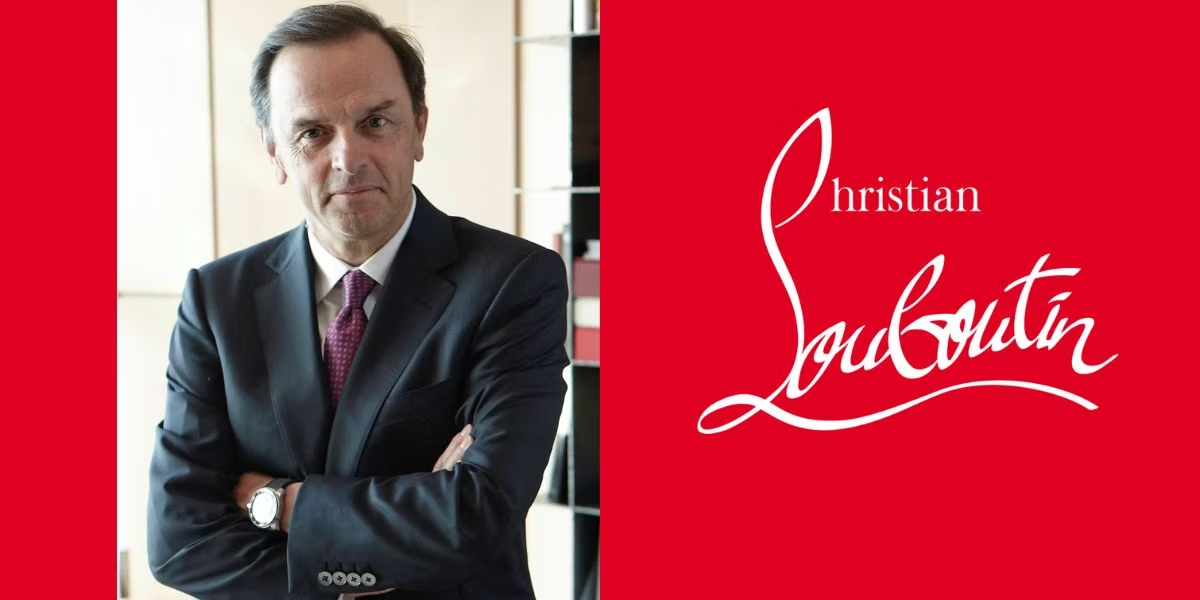
Emparadising Leadership: Insights from a Luxury Industry Veteran
For four decades, the man who ran Cartier North America and Van Cleef & Arpels built his philosophy around one word — a word he had to invent. Now advising at Christian Louboutin, Stanislas de Quercize explains what emparadising means, why it matters, and how the best leaders make heaven of the journey, not just the destination.

Antonio Kanickaraj on Building Bombay Bistro and Bringing Authentic Indian Hospitality to Westbrook, Maine
Antonio Kanickaraj explains how Bombay Bistro became more than a restaurant in Westbrook, Maine, blending family tradition, regional Indian recipes, and a genuine commitment to hospitality that keeps the community coming back.

Building Trust in Digital Finance: Why We are creating a Gold-Backed Stablecoin, Interview of Djamil Kamoula
Exclusive Interview with Djamil KamoulaFor centuries, gold has stood as the ultimate store of value.
Lifestyle.
Read all →
Lifestyle
Absolut's Owner Just Posted a Third Straight Annual Decline
Pernod Ricard's US sales fell 14 percent and its Chinese sales fell 19 percent in the year to June. The company's ready-to-drink category grew 12 percent, driven by younger drinkers. The gap between those numbers is a strategy problem, and it is not the one the industry has been discussing.

Wall Street's Tailors Are Overbooked. Retail Should Be Worried.
New York's bespoke tailors are taking in suits at a ratio they have never recorded, and hiring staff to keep up. The same shift that filled their order books has left the wider apparel industry holding several hundred million units of inventory built against a size curve that no longer describes the customer.

Premium Travel Is Sold on Scarcity. The Pipeline Just Hit a Record.
Two Speeds: Delta's Premium Cabin Just Overtook Its Main Cabin for the First Time. Quiet Luxury Is Priced on the Absence of Other People. Everyone Is Selling the Same Absence.

Inside Luxury Hospitality's Quiet Bet on the Over-50 Traveler
Resorts are swapping day spas for sleep labs and longevity clinics, chasing the wealth concentrated in over-50 travelers. Here's the capex logic behind wellness tourism's shift from amenity to business model.
Sponsored placement

An invitation, extended to Powered readers.
Drive the Continental GT S.
Private test drives available for Powered readers through Bentley Motors.

Coaching.
Read all →
Executive Coaching's Most Quoted Return Figure Came From One Study
Executive coaching's most-quoted return figure comes from a single case study at one company, decades ago. As coaching budgets face procurement scrutiny for the first time, the industry's evidence base is being audited, and the honest case for coaching turns out not to need the inflated number at all.

Fidji Simo's Exit Shows Why Honest Disclosure Is a Leadership Tool
OpenAI's Fidji Simo broke from the usual "pursuing new opportunities" script, naming her chronic illness leave directly. Here's what her candor, and Epic's Sumit Rana making a similar choice, reveals about disclosure as executive strategy, not personal confession.

71% Of Leaders Report Increased Stress. The Coaching Industry Has The Wrong Answer.
Development Dimensions International's Global Leadership Forecast survey of 10,796 leaders worldwide found that 71% of leaders reported increased levels of stress, up from 63% in 2022. The CNBC May 5, 2026 coverage on rising executive burnout, combined with the Wiley Workplace Intelligence 2026 report on HR priorities and the Center for Creative Leadership's data on the most common leadership challenges, points at a structural mismatch between what executive burnout actually requires and what the coaching industry is currently selling.